Docs Ready to use
Distributed CI/CD
Every change to the repository becomes build, tests and a working link, on the machines that were idle.
Every change pushed to the repository becomes build, tests and a working link, without a dedicated build server.
You keep what you already have
- Your repository stays on GitHub.
- Your Dockerfiles stay as they are. Each step builds and runs from the images you already describe.
- One configuration file in the repository (a
.toml) says which steps there are and which ones wait for which. That is all Claro Compute needs to recognize the pipeline.
How it works
-
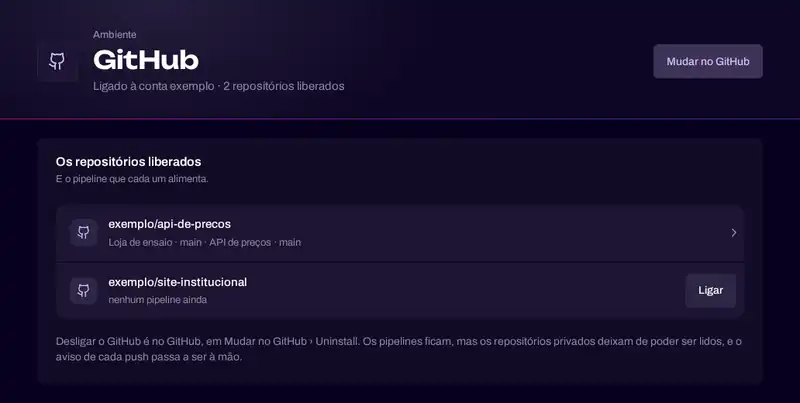
You link the GitHub repository to the platform.
-
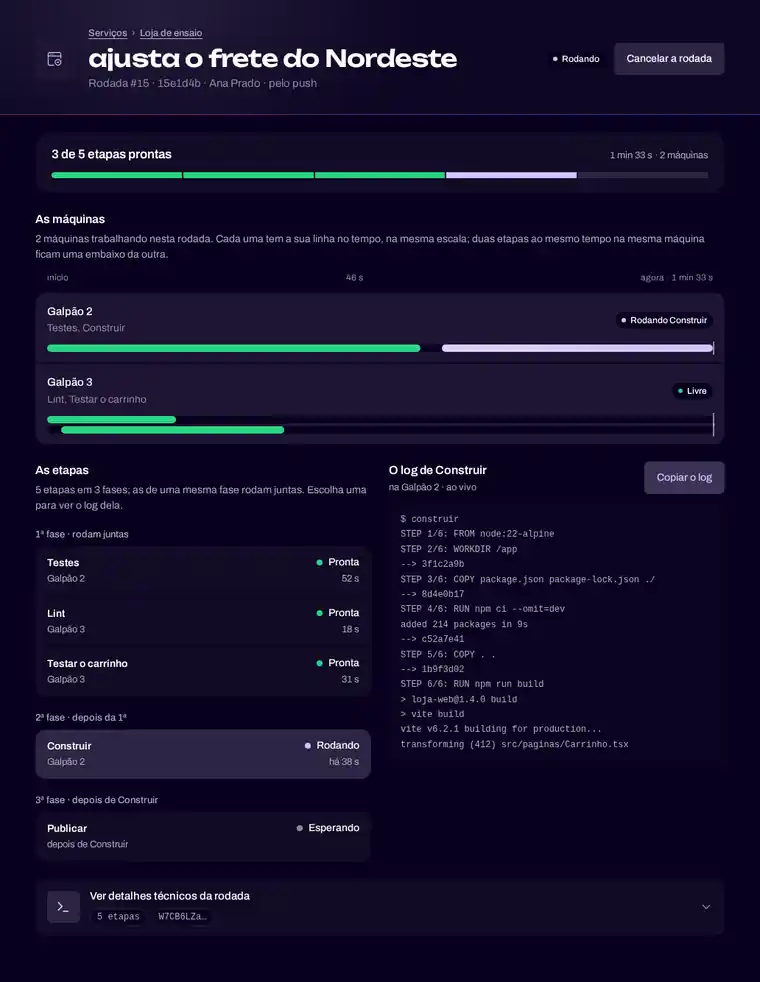
On every change pushed, the steps start on the company’s devices. The ones that do not depend on each other run at the same time, on different devices: the backend on one, the frontend on another, the tests spread out.
-
You follow each device live, with the log of what it is doing.
-
At the end, a publishing step waits for all the others and delivers the link to the application.
-
Pull requests get their own preview, so you see the change running before merging it.
Why on the company’s devices
Heavy builds run on capacity that was already idle, close to the code and the data, with no queue on a rented server, and no build machine paid for to sit idle between pushes. Secrets the steps need come from the vault, never from the code.